
Comparison guide · Updated October 2026
Best Small Space Heaters UK: Which Type Suits Your Room?
There's no single 'best' heater. There's the best type for your room and how you use it. Here's how every common type compares for UK homes.
Quick answer
For a small UK room, the best heater is usually a compact ceramic heater with a thermostat, timer and overheat protection: it warms quickly, takes little space and is easy to control. Choose an oil-filled radiator if you want silent, steady heat for many hours.
Disclosure: Advertorial. We're not the manufacturer or seller and may earn a commission from links to getrapidheat.co.uk.
In this guide
Quick picks by situation
| Your situation | Best type | Why |
|---|---|---|
| Small bedroom or box room | Ceramic plug-in heater | Fast, compact, timer for bedtime |
| Home office, a few hours a day | Ceramic heater | Quick warm-up, heat only while working |
| Living room all evening | Oil-filled radiator | Steady, silent background heat |
| Garage or workshop, direct warmth | Halogen / infrared | Warms you directly, not the air |
| Renters / no floor space | Wall plug-in heater | No fitting, no cables on the floor |
| Older relative | Ceramic plug-in with remote | Simple controls, no bending, timer |
Heater types compared
| Type | Warm-up | Noise | Best for | Typical power |
|---|---|---|---|---|
| Ceramic (plug-in or floor) | Fast | Quiet fan | Small rooms, short sessions | 1–2 kW |
| Oil-filled radiator | Slow | Silent | Long, steady heating | 1.5–2.5 kW |
| Fan heater (coil) | Fast | Noticeable | Quick blasts of heat | 2–3 kW |
| Convector | Medium | Silent | Background heat | 1–3 kW |
| Halogen | Instant | Silent | Direct warmth near you | 0.4–1.2 kW |
| Infrared panel | Fast (direct) | Silent | Wall-mounted, people warmth | 0.3–1 kW |
Ceramic heaters
A ceramic element heats up quickly and a small fan spreads the warmth. Ceramic heaters are compact, quick and usually have good thermostat control, which is why they're popular for bedrooms and offices. Wall plug-in versions save floor space.
Pros
- Quick to warm a small room
- Compact, many plug straight into the wall
- Usually include thermostat and timer
Cons
- Fan makes a gentle sound
- Heat fades fast once switched off
- Not for large rooms
Oil-filled radiators
Oil-filled radiators heat sealed oil, which warms the metal fins and radiates heat. They're silent and keep giving off warmth after switching off, but take 20 minutes or more to get going and are heavy.
Pros
- Silent
- Even, gentle heat
- Hold warmth after switching off
Cons
- Slow to warm up
- Bulky and heavy
- Take up floor space
Small room and want heat fast? A ceramic plug-in heater is the simplest choice.
See RapidHeat price →Fan and convector heaters
Traditional fan heaters use a hot wire coil and a stronger fan. They're cheap and quick but noisier and can smell when dust burns off. Convectors warm air silently and let it rise. They're good for background heat but slower.
Halogen and infrared heaters
These warm people and objects directly rather than the air, a bit like sunshine. They're great when you sit in one spot, but the room itself stays cooler and halogen bulbs give off a bright glow.
Key features checklist
- Overheat protection: non-negotiable.
- Adjustable thermostat: avoids running flat out.
- Timer: avoids paying for heat when you're not there.
- Two or more power settings: low to maintain, high to warm up.
- Remote control: handy for wall-socket heaters.
- UK seller with a guarantee: for support and returns.
Sizing your heater
As a rule of thumb, allow about 100 W per m². A 3 m × 4 m bedroom (12 m²) needs roughly 1.2 kW. Older, draughty rooms need more. Well-insulated new builds need less. For running costs at each power level, see our running costs guide.
Our pick for small rooms: RapidHeat Heater
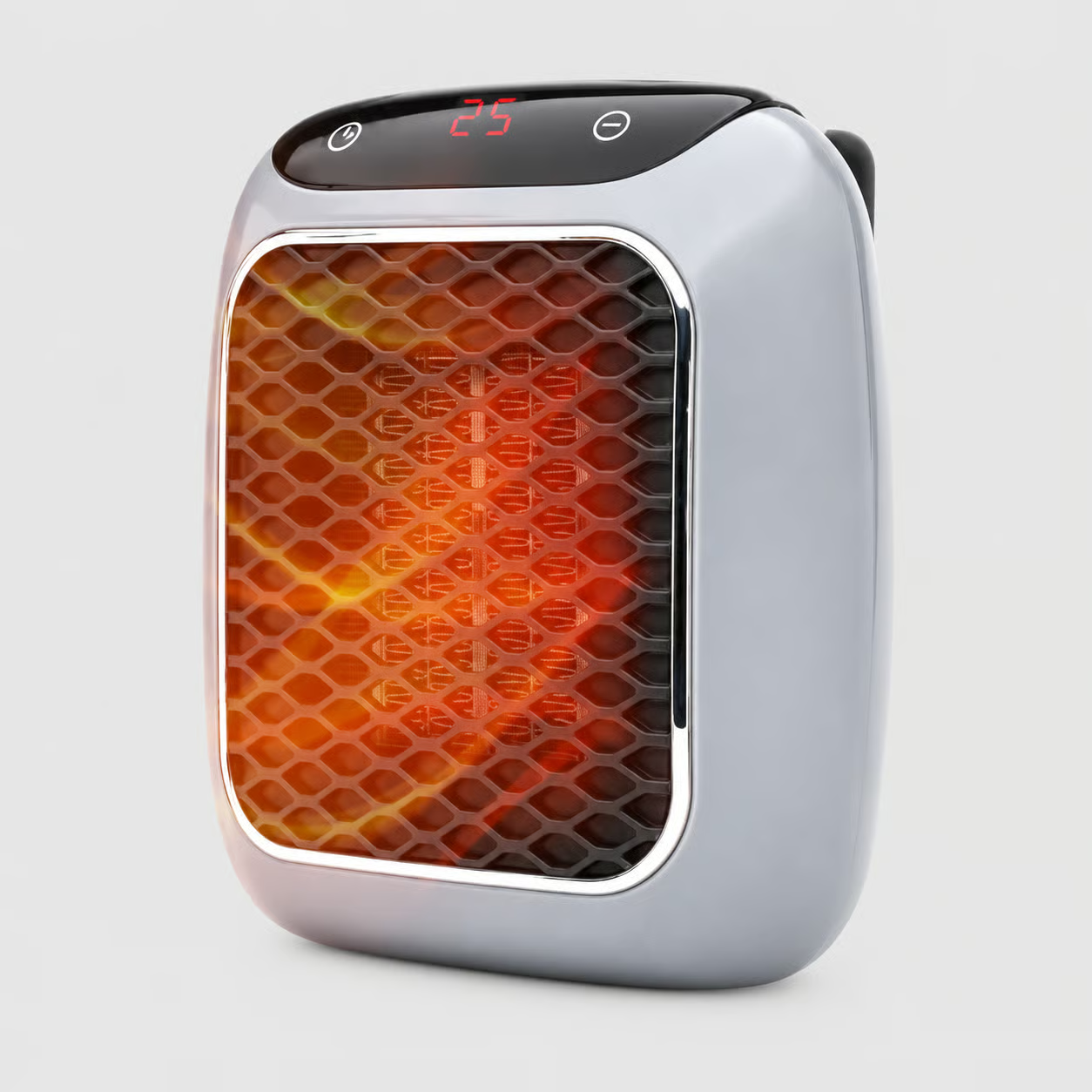
For a bedroom, study or box room up to about 12 m², the RapidHeat Heater combines the features we look for: a ceramic element, about 1.0 / 1.5 kW settings, adjustable thermostat, timer, remote control and overheat shut-off, all in a unit that plugs straight into the wall. It's from £49.95 with free tracked UK delivery and a 30-day money-back guarantee.
Not the right pick if you need to heat a large living room, a whole flat or a bathroom. Choose a larger floor heater or bathroom-rated model instead. Otherwise read the full RapidHeat guide, our legitimacy check or the plug-in heater buyer's guide.
Opens getrapidheat.co.uk · Free tracked UK delivery · 30-day money-back guarantee (per seller)
Frequently asked questions
What is the best small space heater in the UK?
It depends on the room. For quick heat in a small bedroom or office, a ceramic heater with a thermostat and timer is a strong choice. For steady background heat over many hours, an oil-filled radiator works well. For instant, direct warmth, a halogen or infrared heater.
What is the cheapest small heater to run?
All electric resistance heaters turn nearly all their electricity into heat, so cost depends on power and hours used. The cheapest heater is the smallest one that keeps you comfortable, with a thermostat and timer to avoid waste.
Are ceramic heaters better than oil-filled radiators?
Ceramic heaters warm a room faster and are more compact. Oil-filled radiators are silent and hold heat after switching off, but take longer to warm up. Neither is more efficient. They just suit different habits.
What size heater do I need for a small bedroom?
Allow about 100 watts per square metre. A 10 m² bedroom needs roughly 1 kW, so a heater with 1.0–1.5 kW settings is ideal.
Are small space heaters safe?
Modern heaters with overheat protection are safe when used properly: plug into a wall socket, keep fabrics clear and don't leave them on unattended. See our full safety guide.
Which small heater is quietest?
Oil-filled radiators and convector heaters with no fan are silent. Ceramic fan heaters are usually quiet but make a gentle fan sound.
Is a plug-in heater or a floor heater better?
A plug-in (wall socket) heater saves floor space and can't be knocked over as easily. A floor heater can be placed anywhere a cable reaches, and larger models give more heat.
Are infrared heaters cheaper to run?
Infrared heaters warm people and objects directly, so you may feel warm at lower power in some situations. Per kW they cost the same to run as any electric heater.
What's the best heater for a home office?
A compact ceramic heater with a thermostat and timer, so you heat only the room you work in during working hours.
What's the best heater for an elderly person?
Look for simple controls, a remote, a timer, overheat protection and a protective grille, placed where it can't be knocked over. A wall-socket heater keeps cables off the floor.
Opens getrapidheat.co.uk · Free tracked UK delivery · 30-day money-back guarantee (per seller)
How we researched this guide
We read the official seller's product page, delivery and returns information, and guidance from UK bodies such as Ofgem, the Energy Saving Trust and Electrical Safety First. We have not lab-tested the RapidHeat Heater, and we don't publish customer reviews we can't verify. Anything the seller claims is labelled as their claim. Last reviewed: October 2026.
Sources
- Energy Saving Trust – Home energy advice
- Ofgem – Energy price cap
- Electrical Safety First – Electrical safety at home