
Buyer's guide · Updated October 2026
Plug-In Heaters UK: The Complete Buyer's Guide
Everything you need to know before buying a plug-in heater: how they work, what size you need, the features worth paying for and the mistakes to avoid.
Quick answer
A plug-in heater is a compact electric heater that plugs straight into a wall socket. It's a good, low-cost way to warm one small room (around 10–15 m²) without installation. Choose one with a thermostat, timer and overheat protection. Don't expect it to heat a whole house.
Disclosure: Advertorial. We're not the manufacturer or seller and may earn a commission from links to getrapidheat.co.uk.
In this guide
What is a plug-in heater?
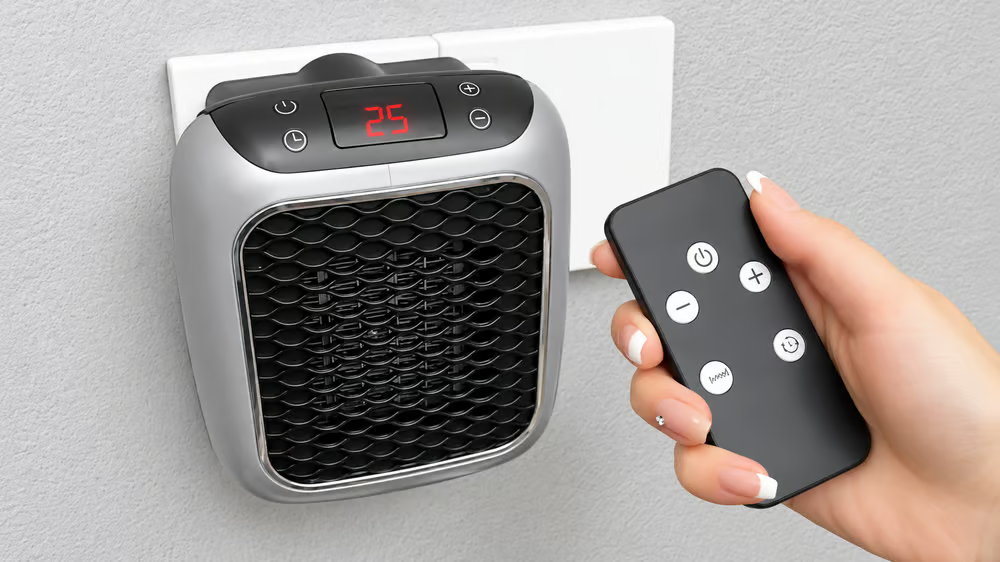
A plug-in heater (also called a wall plug heater, socket heater or plugged heater) is a small electric heater built into a unit that plugs directly into a standard UK wall socket. There's no stand, no cable and nothing to fit. Most use a ceramic element and a quiet fan to push warm air into the room.
How plug-in heaters work
- 1
Plug in
The heater draws power directly from the wall socket.
- 2
Heat the element
Electricity heats a ceramic element. Ceramic warms up quickly and spreads heat evenly.
- 3
Move the air
A small fan pushes warm air into the room.
- 4
Hold the temperature
A thermostat switches the element on and off to keep the temperature you set.
Like all electric resistance heaters, a plug-in heater turns almost all the electricity it uses into heat. The difference between models is how well they control that heat, not some special efficiency. Our energy-efficient heaters guide explains why.
Pros and cons
Pros
- No installation: plug in and go
- Compact, doesn't take floor space
- Warms a small room quickly
- Low purchase price
- Easy to move between rooms
- Good for renters
Cons
- Not for large rooms or whole homes
- Electricity costs more per kWh than gas
- Must go in a wall socket, never an extension lead
- Position depends on where your sockets are
- Fan makes a little noise
What size heater do you need?
A rough rule for an average UK room is about 100 watts per square metre. Older or poorly insulated rooms need more.
| Room | Typical size | Power needed | Plug-in heater suitable? |
|---|---|---|---|
| Box room / small study | 6–8 m² | 0.6–0.8 kW | Yes |
| Single bedroom | 8–10 m² | 0.8–1.0 kW | Yes |
| Double bedroom | 10–14 m² | 1.0–1.4 kW | Yes (1.5 kW model) |
| Small living room | 15–20 m² | 1.5–2.0 kW | Top-up only |
| Open-plan living | 25 m²+ | 2.5 kW+ | No – choose a larger heater |
What to look for
Adjustable thermostat
Holds a set temperature and saves energy once the room is warm.
Timer
Warm the room before you get up, or switch off automatically.
Overheat protection
Automatic shut-off if it gets too hot. Essential.
Two power settings
Low for keeping warm, high for a fast warm-up.
Nice extras: a remote control (so you don't have to bend to the socket), a clear digital display, a rotating plug (so it fits horizontal or vertical sockets) and a seller with a UK guarantee and support.
The RapidHeat Heater has all four key features. See the current price.
See RapidHeat price →Where a plug-in heater makes sense
- Home office: heat the room you work in instead of the whole house all day.
- Bedroom: warm it before bed using the timer.
- Cold spare room or box room that the radiators don't reach well.
- Flats and rentals where you can't add radiators.
- Older relatives who spend most of the day in one room.
Mistakes to avoid
- Using an extension lead. Always plug straight into the wall. See our plug-in heater safety guide.
- Buying for too big a room. A 1.5 kW heater won't heat an open-plan living area.
- Leaving it on full all day. Use the thermostat and timer.
- Believing "1p per hour" claims. Our running costs guide shows the real maths.
- Buying from copycat sites with no UK returns policy.
For renters
Plug-in heaters need no drilling, wiring or landlord permission to install, and you can take them with you when you move. Check your tenancy agreement for any rules on portable heaters, and never block fire exits.
Our pick for small rooms
RapidHeat Heater: a ceramic plug-in heater with about 1.0 / 1.5 kW settings, thermostat, timer, remote and overheat shut-off, suited to rooms up to about 12 m². From £49.95 with free UK delivery and a 30-day money-back guarantee. Read the full RapidHeat review or compare other small space heaters.
Opens getrapidheat.co.uk · Free tracked UK delivery · 30-day money-back guarantee (per seller)
Frequently asked questions
Are plug-in heaters any good?
Yes, for the right job. A plug-in heater is good at warming one small room quickly without installation. It isn't designed to heat a whole house or a large, draughty room.
How does a plug-in heater work?
It plugs straight into a wall socket and turns electricity into heat, usually with a ceramic element and a small fan that pushes warm air into the room. A thermostat switches it on and off to hold the temperature you set.
Do plug-in heaters use a lot of electricity?
They use electricity at their rated power while heating: a 1.5 kW heater uses 1.5 kWh in an hour on full. That's about 41p at 27p per kWh. Using low power, a thermostat and a timer keeps costs down.
What size room can a plug-in heater heat?
Most wall plug-in heaters of 1–1.5 kW suit small rooms of roughly 10–15 m², such as a bedroom, box room or home office. Insulation and ceiling height make a big difference.
Are plug-in heaters cheaper than central heating?
Per unit of heat, gas central heating is usually cheaper. A plug-in heater can cost less overall if you only heat one room for a few hours instead of the whole house.
What's the difference between a plug-in heater and a fan heater?
Many plug-in heaters are compact fan heaters that hang from the socket instead of standing on the floor. Ceramic plug-in heaters use a ceramic element, which is quieter and gentler than older bar or coil fan heaters.
Can renters use plug-in heaters?
Yes. They need no drilling or wiring, so they're popular with renters. Check your tenancy for any restrictions on portable heaters.
What wattage plug-in heater do I need?
As a rough guide, allow about 100 watts per square metre in an average UK room. A 12 m² bedroom needs around 1.2 kW, so a heater with 1.0–1.5 kW settings fits well.
Do plug-in heaters dry out the air?
Electric heaters don't remove moisture, but warmer air can feel drier. A bowl of water or houseplants can help if it bothers you.
Which plug-in heater is best?
Look for a ceramic element, a thermostat, a timer, overheat protection, a remote and a seller with a clear guarantee. The RapidHeat Heater ticks those boxes for small rooms.
Opens getrapidheat.co.uk · Free tracked UK delivery · 30-day money-back guarantee (per seller)
How we researched this guide
We read the official seller's product page, delivery and returns information, and guidance from UK bodies such as Ofgem, the Energy Saving Trust and Electrical Safety First. We have not lab-tested the RapidHeat Heater, and we don't publish customer reviews we can't verify. Anything the seller claims is labelled as their claim. Last reviewed: October 2026.
Sources
- Energy Saving Trust – Home energy advice
- Ofgem – Energy price cap
- Electrical Safety First – Electrical safety at home